In 1970, the San Francisco Chronicle published an article titled "Professor Sees Peril in Education," where Roger Freeman, a former advisor to President Nixon and then-director of the California Department of Finance, outlined a targeted strategy to dismantle free college education in the state. His approach was simple: starve the system.
By slashing state funding for higher education, Freeman ensured that California’s once-free college system—once a model for accessible education—was dismantled by the end of the decade.
A truly ideological assault, this attack flew in the face of decades, perhaps even centuries, of common societal wisdom. Education, once considered a bipartisan priority, became the contested battleground of the 20th and 21st centuries.
And because nobody believed that anyone would ever make such an attack in the first place, the movement to defend education in the United States was slow, disjointed, and ultimately ineffective.
Similarly, by 2024, libraries faced a massive defunding wave in the United States.
The EveryLibrary organization, dedicated to protecting libraries from such attacks, showed that politically motivated community and legal efforts targeting libraries, librarians, and teachers were increasing. All such attacks focused on concepts of diversity, but in particular attempted to stamp out any mention of class struggle, racial inequality, LGBTQ+ issues, and themes related to sexuality, abuse, and complex mental health conditions.
We saw this in 2024, when elected politicians made it commonplace to slander library workers, propose civically unsound library defunding attacks, and follow through on the previous Trump administration’s proposals for gutting federal support.
Just as with education, libraries are an institution that millions of Americans rely upon. The devastation wrought by removing these resources would be incredible.
And, as always, the argument for cutting programs like this turns toward a shallow dimension. Terms like "eliminate bloat" are thrown around without ever defining what they mean or what they want to do.
Ultimately, what the leaders of these attacks mean (even if they don't say it out loud) is that they want to remove power and resources from the lower classes of our society.
We continue to see attacks in 2026 as state legislatures introduce bills that limit access to libraries, create dangerous precedents for parental control/notification requirements, segregation, or the limitation of free speech.
But we’re also seeing a heavy fight from organizations like EveryLibrary, the American Library Association, and many more, pushing back against the current administration’s excesses.
One of the wins came in April of 2026, when a settlement was reached with the U.S. Department of Justice to protect the Institute of Museum and Library Services and ensure that the agency could continue carrying out its congressionally mandated work. One battlefield victory in a decades-long war.
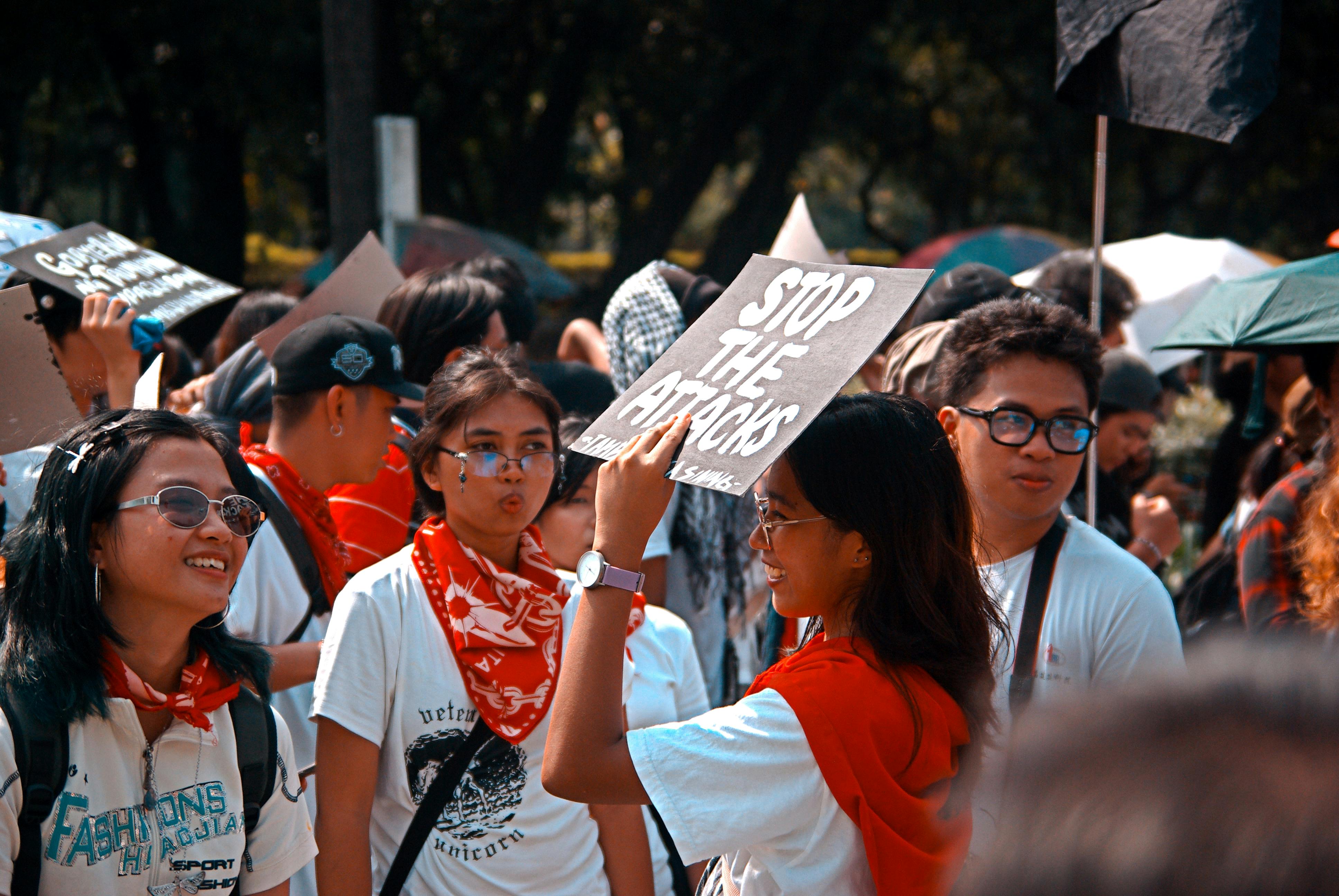
But the fight is far from over. It requires that people believe in the danger, understand the danger, and become willing to defend libraries in a way that education sadly was not defended in the 1970s and 80s.
Because now, just like in the early half of the last century, nobody thought they needed to fight for public education because, for the longest time in the halls of politics, libraries were a bipartisan-supported issue.
The hopeful catch? Libraries still are a fully bipartisan-supported issue when you look at the actual voters across the country.
It’s only small groups of potent but vicious agitators that are managing to push through anti-library laws.
Welcome, dear reader, we're so excited to have you here. Please consider subscribing to our newsletter to get Unenlightened Generalist content in your inbox regularly!
Overview
- In 1970, Roger Freeman outlined an attack on free colleges in the US, leading to the dismantling of California’s accessible education system.
- Reagan’s administration later eliminated free college in California, a move enabled by the complacency of its defenders.
- Education was once a bipartisan issue, so nobody defended it—until it was too late.
- Libraries are now facing a similar crisis, with coordinated attacks on their funding and purpose.