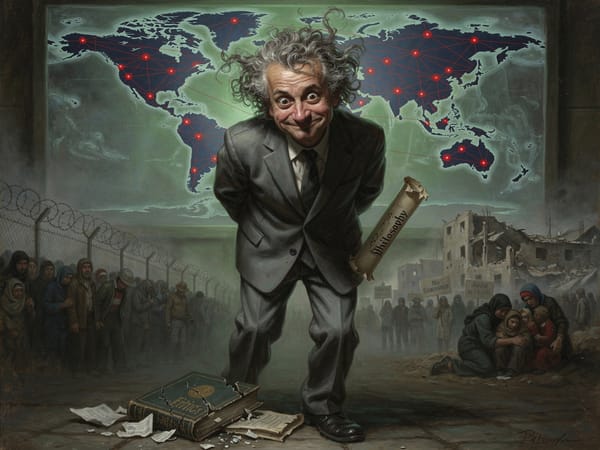
Carnegie's Myth of "Useful Knowledge" Broke Modern Education
From 19th-century union busting to the 21st-century literacy crisis, tracing the deliberate marginalization of the liberal arts.

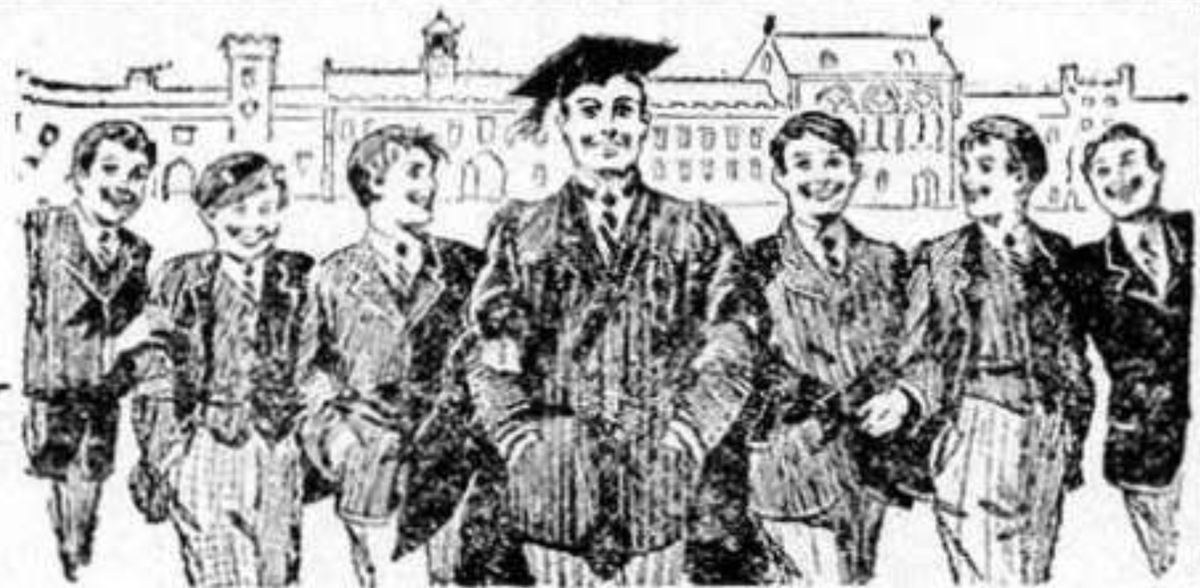
Andrew Carnegie is often celebrated as the benevolent "Father of Libraries," a title that conveniently obscures the fact that he was also an inveterate union breaker and a ruthless enemy of the working class.
A prime example of this duality is the Homestead Strike of 1892. After using private armies and state militia to violently crush a town's labor union, Carnegie would "gift" the broken community with a library. He would then proclaim that the workers needed to uplift themselves by using that library to acquire practical knowledge.
This wasn't just philanthropy; it was a deliberate strategy of social engineering rooted in what we can call the ideology of "useful knowledge."
Practical knowledge—or "useful knowledge," as Carnegie espoused—is essentially a curriculum of skills and perspectives designed to support the structure of class dominance. It trains workers to be efficient cogs in an industrial machine rather than well-rounded, critical thinkers.
You can see this highlighted perfectly in a speech Carnegie gave to workers in Braddock, Pennsylvania, in 1889:
"If you want to make labor what it should be, educate yourself in useful knowledge. This is the moral I would emphasize."
He then went on to disparage "high literature," mocking everyone from Shakespeare to the authors of classical antiquity, and declaimed that people had been educated as if they were destined for life on some other planet. He argued that a liberal arts education was actively harmful to the working class, stating: "What they have obtained has served to imbue them with false ideas and to give them a distaste for practical life."
Carnegie's ideas would go on to have a direct, devastating impact on the marginalization of the liberal arts in America.
This link between "useful knowledge" and "practical life" is vital to understand when examining the disenfranchisement of the American education system. For the better part of Western civilization, the liberal arts (literature, philosophy, history, language, and the arts) were considered the absolute epitome of a strong, liberating education.
Yet, under the pressure of industrialist ideologies, education systems began prioritizing so-called "worthwhile" STEM and vocational subjects while systematically stripping away the arts and humanities, dismissing them as superfluous luxuries reserved for the elite.
The Global Literacy Crisis
Today, the lack of liberal arts education is morphing from a philosophical debate into a dire global crisis.
We are witnessing a steep, modern decline in reading and a drop in general literacy overall. This is not just happening in America; it is a planetary trend.
Aside from a couple of countries—namely Finland and Denmark, who have managed to keep a strong tradition of cultural reading intact—the numbers are falling. Even in Japan and other East Asian countries that traditionally maintain high literacy rates, students and institutions are increasingly pressured by educational models that prioritize technical, economic utility over deep cultural engagement.
Tech-Centricity and the Crisis of Feeling
This brings us to the present reality: the corporate tech-centricity and the "crisis of feeling" that is currently ravaging the United States education system.
You cannot fully understand this crisis of literacy and reading unless you place it alongside the systemic defunding of public education. We have bought into the capitalist myth that what is "useful and practical" is somehow entirely separate from the world of art, empathy, and feeling.
This forced separation has given rise to a deformed, tech-centric, and attention-reductionist style of education. We are no longer teaching students how to think, feel, or challenge the world around them; just as Carnegie wanted in 1889, we are simply training them to efficiently operate the machinery of the so-called practical life... which incidentally keeps them eternally in service to the ranks of the social elite.
I’m Odin Halvorson, a librarian, life coach, and fiction author. If you like my work and want to support what we do here at Unenlightened Generalists, please consider becoming a paid subscriber to our newsletter for as little as $2.50 a month!
Support us in other ways:
- Start writing and reading with the Supernote, and support me at the same time!
- Like audiobooks? Hate DRM? Use this affiliate link to sign up for Libro.fm, where you actually own the books you buy!
- Want your own Ghost newsletter? Check out MagicPages for the cheapest hosting rates via my affiliate link (they even offer lifetime hosting plans!)
Thanks for your support!
References
- AFL-CIO. “1892 Homestead Strike.” Accessed February 2026. https://aflcio.org/about/history/labor-history-events/1892-homestead-strike.
- Carnegie, Andrew. "Address at the Dedication of the Carnegie Library, Braddock, Pa." In The Gospel of Wealth and Other Timely Essays. New York: Century Co., 1900.
- Carr, Nicholas. The Shallows: What the Internet Is Doing to Our Brains. New York: W.W. Norton & Company, 2020.
- Giroux, Henry A. The Crisis of Public Education and the Corporate Takeover of Higher Education. New York: Routledge, 2024.
- Kimball, Bruce A. Orators and Philosophers: A History of the Idea of Liberal Education. New York: College Board, 1995.
- Nasaw, David. Andrew Carnegie. New York: Penguin Press, 2006.
- Nussbaum, Martha C. Not for Profit: Why Democracy Needs the Humanities. Princeton: Princeton University Press, 2010.
- OECD. PISA 2022 Results (Volume I): The State of Learning and Equity in Education. Paris: OECD Publishing, 2023.
- World Population Review. "Literacy Rates by Country 2024." Accessed February 2026.
- Young, James P. The Ideology of Applied Knowledge. Cambridge: Cambridge University Press, 2015.