The LIE of the Alpha
How A Biological Myth Brainwashed The Modern World

One of the most irritating and pervasive myths circulating throughout our society is the idea that human beings are innately selfish, cruel, violent, brutish, and lousy.
The truth is far more complex, and frankly, far more interesting.
One of the primary sources of this that needs to be broken down is Richard Dawkins' "Selfish Gene." This is a concept he popularized in his book of the same name, and it quickly reached a massive audience, proving very successful among the powerful and the elite—ironically, the very people in our society who actually are quite selfish.
But I can begin the deconstruction of Dawkins' theory—which he himself no longer holds to in remotely the same way as he originally did, by the way—without even touching on the biology. At least, not at first.
Instead, I can focus on addressing what is called a category error: the attribution of human emotions to inanimates... in this case, chemicals.
The Midi-chlorian Delusion
If you think about it for a moment, what Dawkins has done with his selfish gene idea is, effectively, recreate the Star Wars Midi-chlorian.
Suddenly, there is a self-aware particle capable of acting on its own, exerting its will, and altering the fate of the universe. Inevitably, this leads to Anakin Skywalker and the Empire.
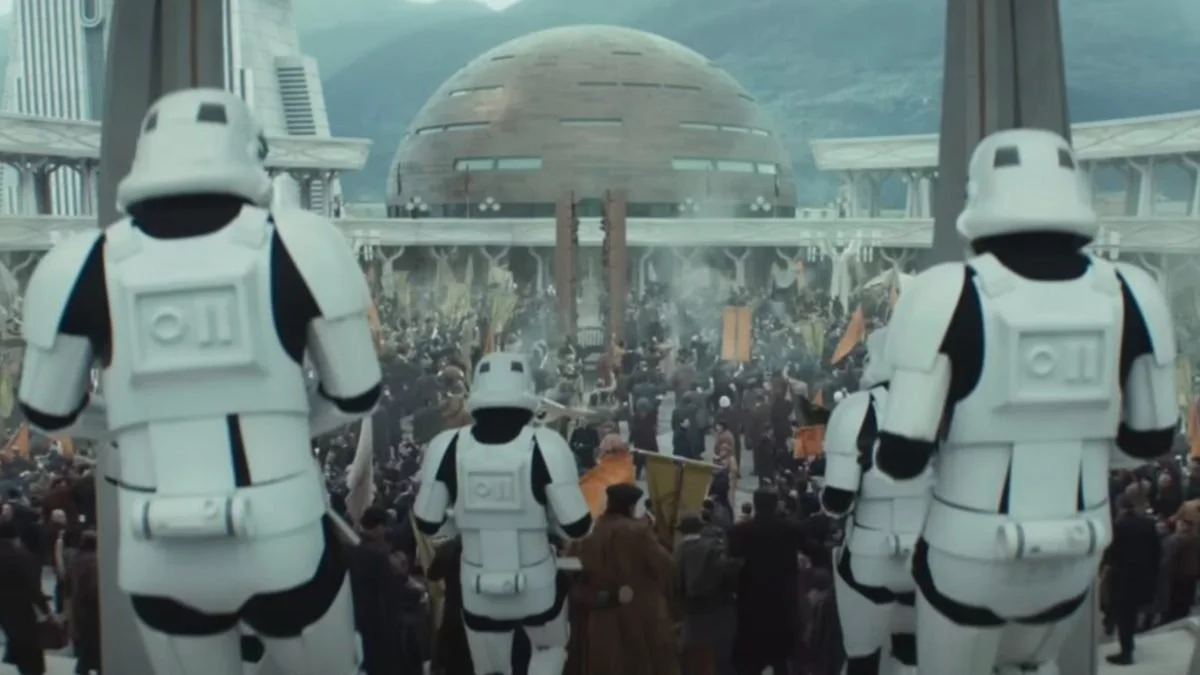
Or does it?
The fact is, the language itself is flawed, and therefore the scientific conclusions drawn from it are equally flawed. Mary Midgley has a beautiful quote to this effect:
"Genes cannot be selfish or unselfish, any more than atoms can be jealous, elephants abstract or biscuits teleological. This personification in its literal sense is essential for Dawkins' whole contention. For without it, he is bankrupt."
Once we strip away the metaphor, we have to look at how natural selection actually works in the wild. The "Selfish Gene" assumes that genes are the central protagonists of evolution—that they fight for dominance like little tin soldiers.
However, modern evolutionary biologists argue that nature is actually blind to the gene itself. It is not the genes that are being targeted by any process of nature; it is the entire being, the entire animal or plant.
This is a common problem with reductionistic thinking, which has plagued us for centuries. We break down the world into these fundamental, separate, siloed categories and assume that we have a perfect and unbiased view of how things work. In reality, reality itself is a series of interconnected systems.
In terms of success in evolution, it is not the replication of a single DNA strand that matters. It is the survival of the organism itself. This is a vital distinction because it shifts the "unit of selection" (the thing that is producing evolutionary change) from a microscopic, self-aware gene back to the macroscopic living being.
The Problem With "Family Math"
Now that we have established the philosophical flaws, we need to look at the fundamentals of logic. This is where Dawkins relied heavily on a concept called Kin Selection (or "inclusive fitness").
To put it simply, Kin Selection is the idea that you aren't nice to your brother because you love him; you are nice to him because he is a "genetic life raft" carrying 50% of your DNA. The theory argues that animals run a subconscious cost-benefit analysis: "I will save my sister, but only because she carries enough of my genes to make the risk worthwhile."
But as our mathematical models of evolution have improved, we have found that this "Family Math" doesn't actually hold up. It requires specific, rigid conditions that rarely exist in the messy real world.
“Inclusive fitness theory is not a general theory of evolution. It is a limited theory that works only under specific conditions... and there is no rigorous, general mathematical formulation of inclusive fitness theory.” — Martin A. Nowak et al., Nature (2010)
Real cooperation is much messier and much more robust than simply counting how many cousins are in the room.
The Passive Template
If the math is shaky, what about the biology?
Dawkins' view rests on the Central Dogma. This is the idea that DNA is the king at the top of our organic hierarchy building a kingdom by giving orders to the serfs below. But systems biology has flipped this on its head.
Genes are not active architects; they are passive templates.
Think of DNA not as a blueprint that dictates the building, but as a journal with pre-defined sections for writing about different parts of life. The journal pages provide the structure—the lines and the boxes—but the organism itself, reacting to the world, decides what gets written in them.
As Denis Noble explains, Dawkins gets causality backward:
- He represents genes as active causes, when they are just templates waiting to be used.
- He ignores the fact that the organism is the locus of decision-making, not the DNA.
The Science of Mutual Aid
If we discard this "selfish competitor" model, we open the doorway to discover a far more reliable replacement for human success. The consensus shared by most evolutionary biologists today is that humans didn't evolve through constant combat, but by cooperating and needing one another.
If we weren't winning through combat, how did we evolve? The truth is extremely telling: We evolved through mutual aid.
We advanced through needing one another. And this wasn't just a choice to be "nice" for the sake of being nice. The truth is, we were biologically unable to survive alone. We became so interdependent upon one another that we ended up with an innate, direct interest in the well-being of those around us.
Our social innovations, from cooking, to language, to laws and belief structures, created a pressure for the genes to change. We call this Gene-Culture Co-evolution.
Survival of the Friendliest
How did we achieve this high level of social integration?
The leading hypothesis is self-domestication. This is the same process by which we tamed wolves into dogs.
Consider the famous Soviet experiment that started in the late 1950s in Siberia, which focused on raising a very aggressive breed of fox and selecting purely for friendliness to see exactly what that would do.
Just as we selected animals for friendliness, we inadvertently selected for friendliness in ourselves. In order to survive in a cooperative group, those who were really aggressive actually got weeded out. They couldn't find mates, or they might just be killed outright. That left a largely more tolerant and cooperative species behind.
If the old view was that competition is the primary driver of evolution, the new perspective is that cooperation is the decisive organizing principle of human society.
The Warning
We must take a few key takeaways about where we are going as a people.
If we continue to idolize an aggressive, violent, dominant perspective, we are actually driving against our entire evolutionary history. In fact, we are creating the exact same conditions for ourselves that led to the eventual destruction of all of our cousin species in the genus Homo.
We are fundamentally evolved to be social, cooperative beings. We are designed for mutual aid.
We can foster this directly and immediately within our society now.
We can choose to build systems that intentionally avoid top-down violent hierarchies.
We can choose not to give into authoritarianism.
We can choose to be the people that evolution designed us to be.
And we need to, because our Neanderthal cousins show us what happens when we fail.