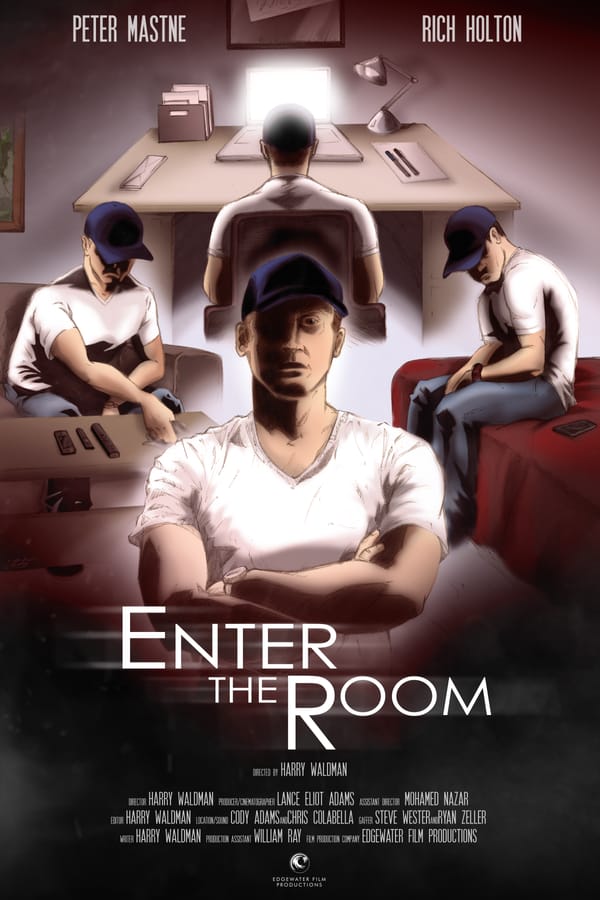
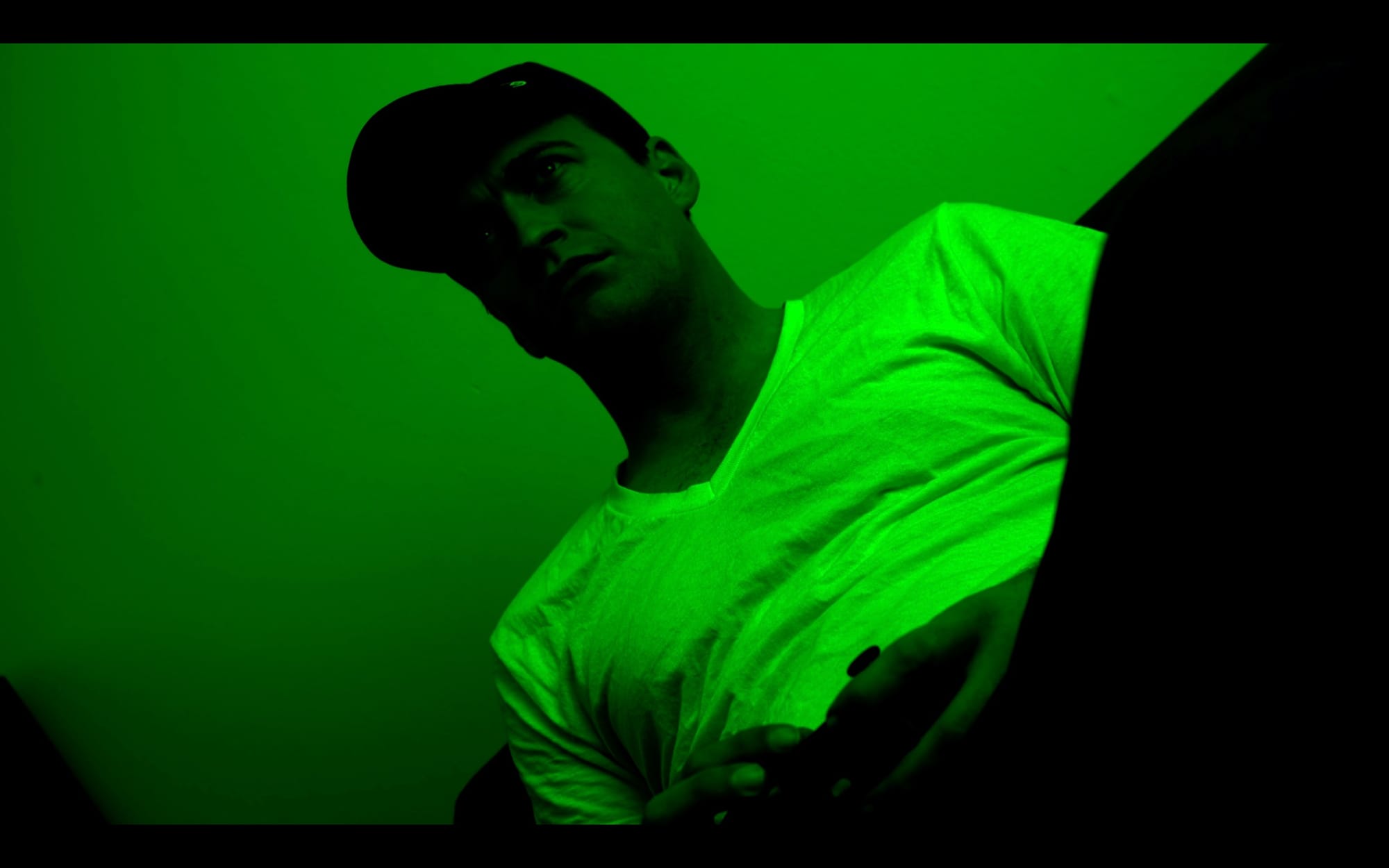
In Enter the Room, director Harry Waldman strings a tightrope between familial affection and the unsettling fragility of perceived reality. Through increasingly claustrophobic framing, Dutch angles, and blurred focus, alongside potent shifts in color, we move from the familiar territory of domestic drama into a subjective underworld of psychological uncertainty.
Welcome, dear reader, we're so excited to have you here. Please consider subscribing to our newsletter to get Unenlightened Generalist content in your inbox regularly!
I’m a huge fan of films that twist our understanding of meaning itself, and Enter the Room builds its tension within the widening gap between what is and what appears to be. From his earliest interactions with his brother Jeremy, Brian’s clipped demeanor and strained expressions suggest something off-kilter beneath the ordinary negotiations of hospitality. As the film progresses, unease expands to fill the apartment, intensified by tightening close-ups and a score that lingers just beneath conscious attention. Who is Brian beneath his compulsive insistence on order? And is Jeremy as innocent as he initially appears?
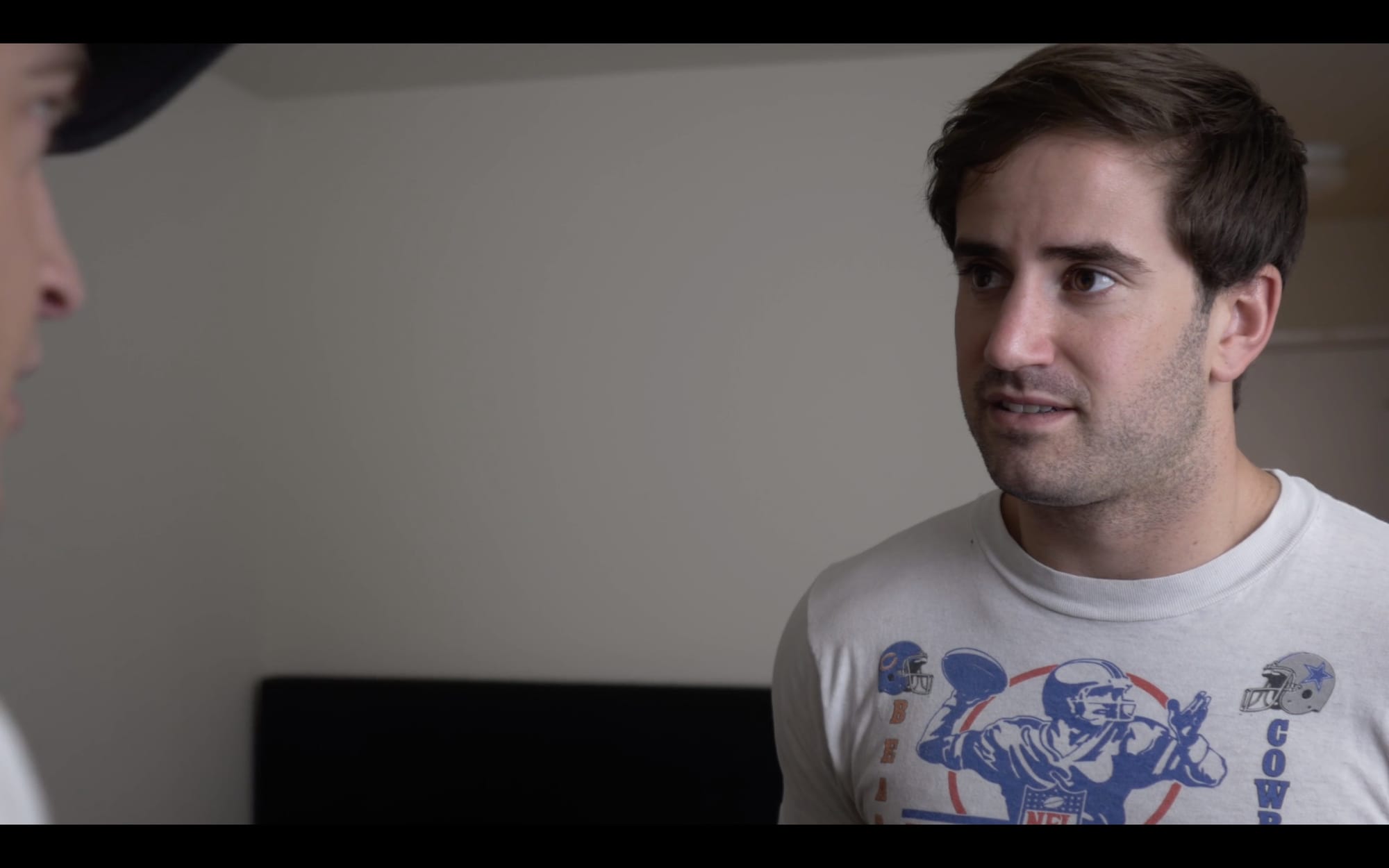
What makes this tension effective is its grounding in the painfully mundane. Rent, sleeping arrangements, the placement of a laptop, the cleanliness of a bed: these are the small negotiations through which we make room for other people in our lives. Under Brian’s scrutiny, however, they become a shifting system of obligations that Jeremy can never quite fulfill. An accommodation offered in one moment becomes an accusation in the next. The apartment grows smaller with every conversation, its boundaries defined as much by Brian’s expectations as by its walls.
There’s an uncomfortable familiarity here for anyone who has lived with another person. We all possess habits that seem reasonable from inside our own experience, and which become baffling (or unbearable) when imposed upon someone else. Waldman pushes that recognition toward its breaking point. Brian’s need for quiet, cleanliness, and financial fairness gives us enough recognizable material to at least potentially understand his complaints, even as their accumulation and delivery makes us recoil. The problem is that every concession seems to uncover another condition, another dissatisfaction. Jeremy can occupy the apartment, but he struggles to find a way to exist comfortably within it.
As we get closer to the denoument, Jeremy’s apparent provocation of his brother’s germophobia momentarily seems like an escalation destined to take us into murderous territory. Through the clever use of camera position and blocking, however, we are also instantly filled with doubt about the sanity of the entire situation at a more fundamental level. By this point in the plot, we’ve gathered enough subtle evidence to suggest that more is at work than meets the eye, and that the reality these brothers inhabit may hold more mirrors than nature. The frenetic climax of their relationship acts as a perfect runway to land the revelation right when it’s needed most.
I suppose my largest qualm is whether I believe in the apparent inciting incident enough to accept that Brian’s experience could become so completely fractured and dissociated. I followed along assuming that the stakes were larger: death, perhaps. In this way, all the excellent tension built right up to the edge of horror takes on a risky element of near-farce that I’m not completely certain the film recovers from.
Furthermore, there are some disconnected moments in the quality of the cinematography where I found myself perfectly aware of watching a low-budget film shot on basic equipment. These contrasted with moments where strong cinematography and excellent acting combined to create both tension and focus, grounding me in the viewing experience so thoroughly that I became immersed in the action. This sort of inconsistency is perhaps to be expected in an experimental indie short, however, so it doesn’t dock many points from my overall experience.
Ultimately, this film succeeds most convincingly in making the familiar feel unstable. Waldman understands how an ordinary room can become an intolerable space, and how the smallest exchanges between people who love each other can carry an unsettling weight. I remain less persuaded by the explanation for Brian’s fractured experience than by the experience itself; the revelation asks for a degree of belief that the preceding tension doesn’t quite secure. Even so, Enter the Room is an ambitious, frequently absorbing short whose strongest moments reveal a filmmaker capable of drawing considerable psychological force from modest means. Its inconsistencies left me with reservations, but also with an interest in seeing where Waldman takes that ability next.
I’m Odin Halvorson, a librarian, life coach, and fiction author. If you like my work and want to support what we do here at Unenlightened Generalists, please consider becoming a paid subscriber to our newsletter for as little as $2.50 a month!
Support us in other ways:
- Start writing and reading with the Supernote, and support me at the same time!
- Like audiobooks? Hate DRM? Use this affiliate link to sign up for Libro.fm, where you actually own the books you buy!
- Want your own Ghost newsletter? Check out MagicPages for the cheapest hosting rates via my affiliate link (they even offer lifetime hosting plans!)
Thanks for your support!